
An Irish winter is rarely about deep snow. It is months of wet roads, a few sharp frosts, salt on the main routes and the M50 in the dark at both ends of the working day. Those conditions find the weak spots on a car. Checking a few things before December is cheaper and calmer than finding them on a cold morning.
Brakes: salt and damp
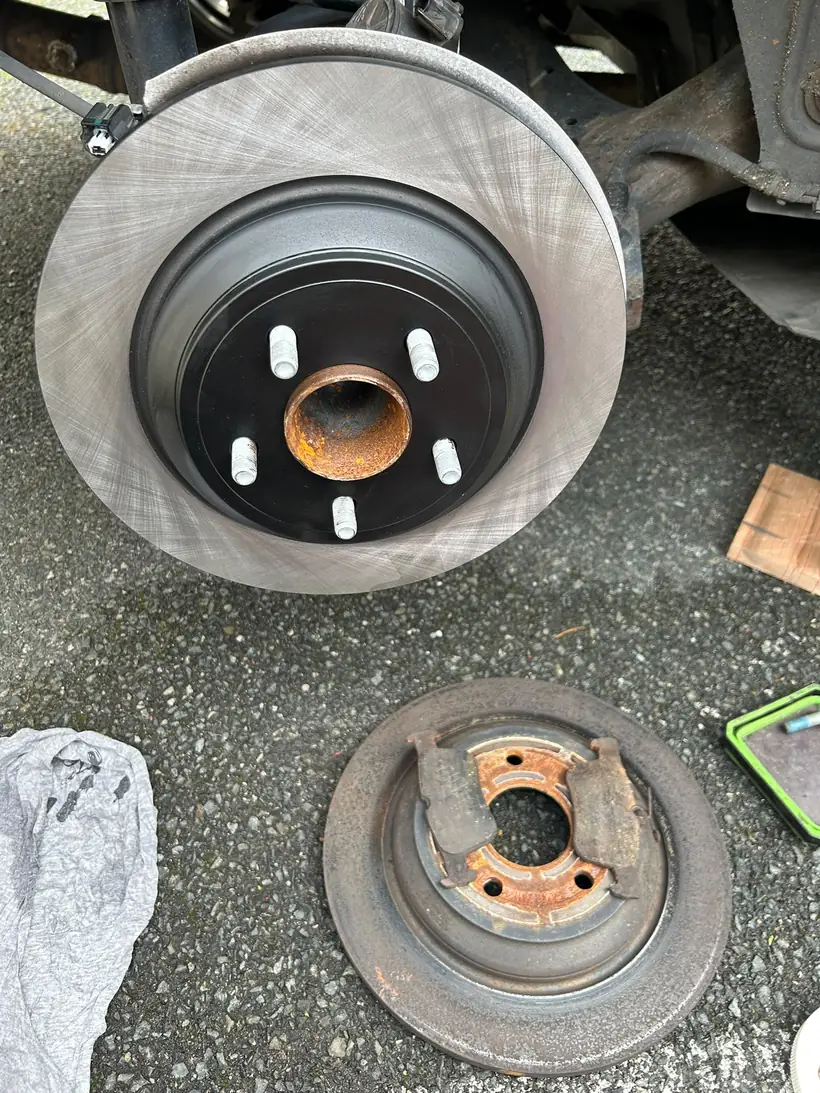
Gritting salt and constant wet speed up rust on brake discs, above all on the rear brakes, which do less of the work and so are not heated and scrubbed clean as often. A disc with a thick rusty lip and a pitted face does not stop the car as well, and it often grinds or judders. If your car sits outside most of the week, have the brakes looked at before winter rather than after. Our brake replacement at home page shows a rear disc that had gone this way.
Tyres: tread and pressure
The law sets 1.6 mm of tread as the lowest you may drive on, yet a tyre loses its hold on standing water long before it wears down that far. Look at all four tyres, inside edges included, and check the pressures when the tyres are cold. Cold air lowers the pressure, so a tyre that was fine in September can be soft by December.
Battery and starter
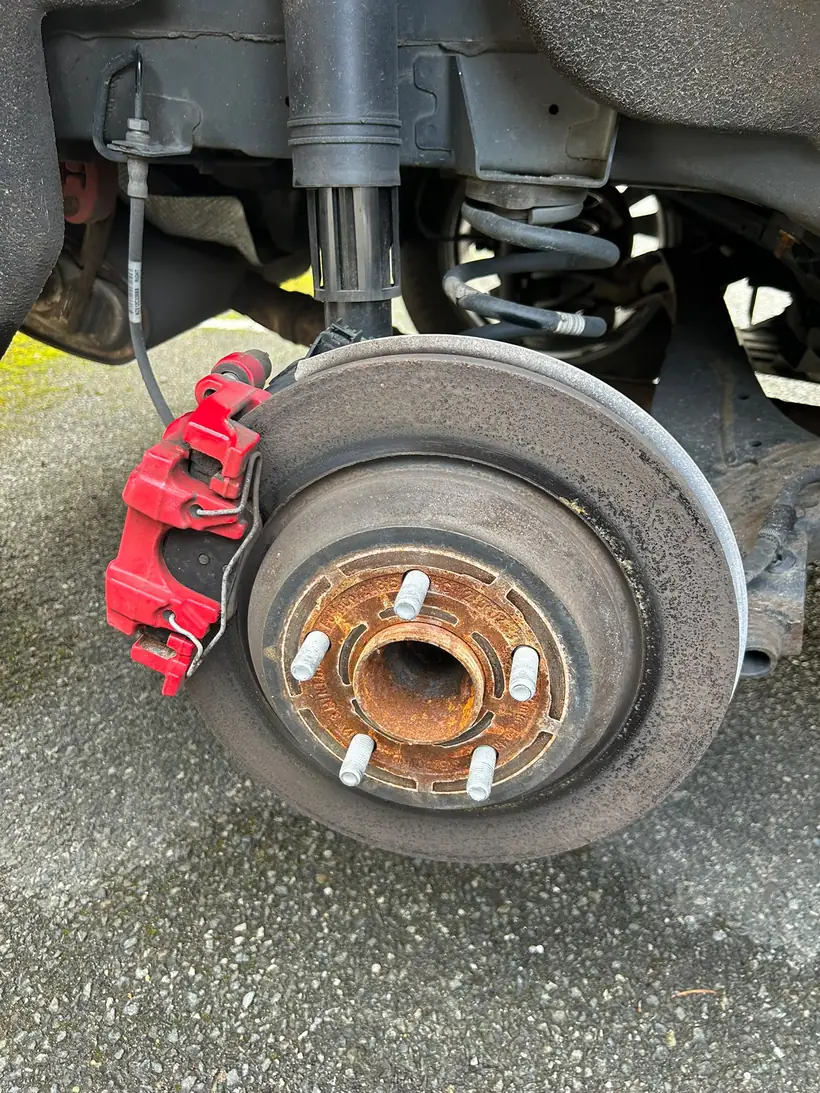
A cold engine is harder to turn over, and a battery has less to give in the cold. If the engine has been turning slowly on frosty mornings, or the lights dip as you start it, that is the time to have it tested, not after it gives up in a car park. A slow start is not always the battery: a tired starter motor feels much the same from the driver’s seat, which is why we test before we replace anything. More on that in car will not start.
Coolant and antifreeze
The coolant has two jobs: it carries heat away from the engine and stops the water in the system freezing. Years of topping up with plain water dilute it. Its strength can be checked with a simple tester in a minute. Never open the cap on a hot engine.
Lights: you will need them by half four
Around the shortest day, the light over Dublin has gone before five o’clock. Walk round the car with the lights on: dipped and full beam, brake lights, indicators, fog lights and the number plate light. Wipe the lenses. A blown bulb is a quick fix, and lights are on the NCT list too.
Wipers, washers and the screen
Smearing blades and an empty washer bottle are a real hazard behind a lorry on a wet dual carriageway. Change blades that chatter or streak, and fill the bottle with proper screenwash rather than water, which can freeze in the pipes. Clean the inside of the glass as well; a grubby screen mists up faster.
Belts and charging
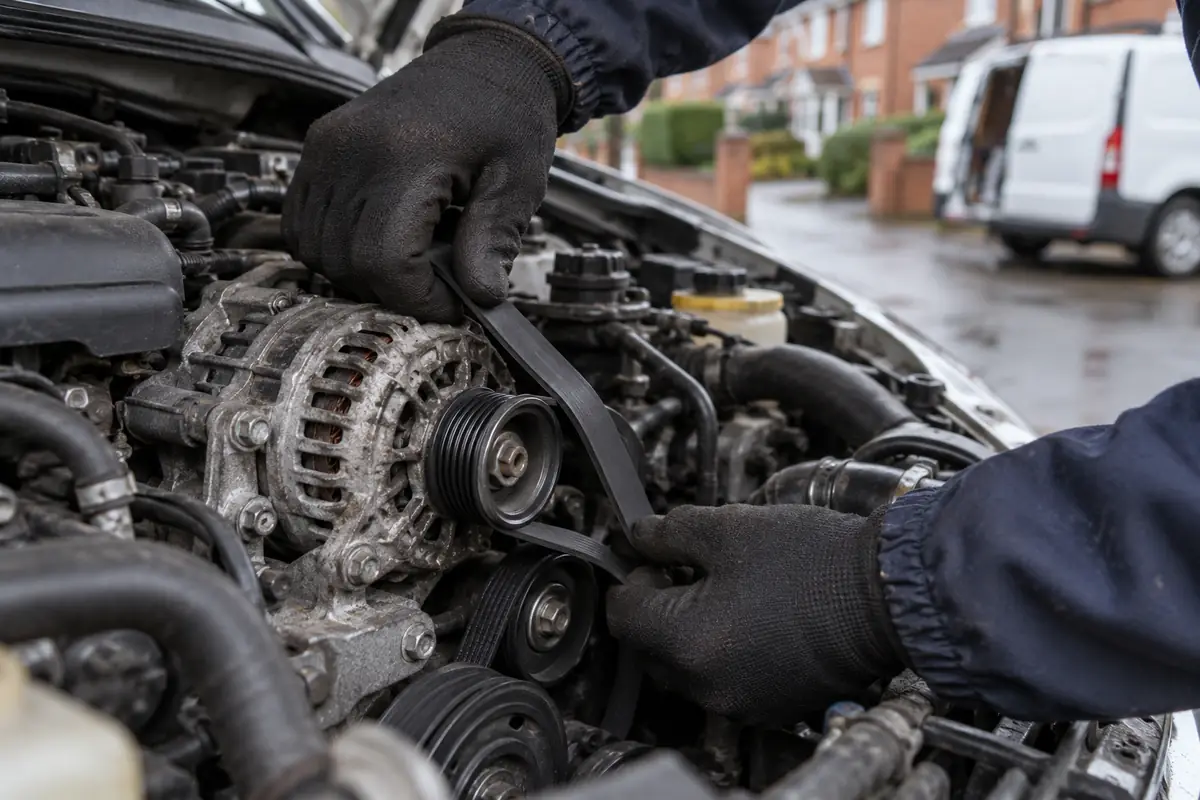
Heater fan, lights and the heated rear screen all lean on the alternator in winter. A worn auxiliary belt can squeal on a cold start or slip in the wet. We look at its condition and check the charging voltage while the bonnet is up.
A small kit for the boot
- A torch, with spare batteries
- A high-visibility vest for each adult who travels in the car
- A scraper and a cloth for the screen
- A warm layer, some water and a phone charger
If the car stops somewhere dangerous, the people come before the car: climb out through the doors furthest from the moving lanes and wait well back from the road. If anyone is hurt or in danger, ring 112 first.
A winter look-over at your door
If you would like someone else to go over the car, book a call-out and tell us you want it checked for winter. We come to your home or workplace, and a booked call-out is €180 with the diagnostic check included. Any work after that is priced and agreed with you first, as on our mobile mechanic prices page.
087 452 4853